

MEFI formula contract
FMEFI = kc/r² − kr/[r²(1+r)] + ΔQ·fUFRkc expansion • kr compression with (1+r)verifyingEarth UFR Mission Control v3.0 — 30-Day Research History
Full signed magnetic vector • plasma density and temperature • velocity vector • hPa expansion/compression lane • authoritative MEFI publishing
status: booting…
Why run MEFI: the framework tests whether changes across different measured channels form an ordered, coherent propagation pattern while preserving every source value and unit.
What the framework changes: it adds a shared ΔQ/coherence/FMEFI interpretation, stage, confidence, and timing context. It does not alter the measurements, replace missing readings, prove causation, or guarantee an outcome.
Research history: every live refresh is retained locally for up to 30 days. The chart browser can move through the full recorded period, while one chronological CSV exports native measurements, recorded and reanalyzed MEFI terms, per-channel ages, source lineage, and explicit missing-data quality fields.
Earth UFR Mission Control
Central telemetry propagation hub • direct observations → recalculated MEFI dynamics → downstream interpretations
Raw observations
Solar X-ray • plasma density and temperature • velocity Vx/Vy/Vz and speed • signed IMF Bx/By/Bz/Bt • proton flux • electron flux • surface pressure in hPa • Earth-response context
MEFI processing
Time-align • per-channel change • driver dynamics • ΔQ • MEFI coherence r(t) • coupled modulation • propagation analysis
Downstream interpretation
FMEFI result • propagation stage • confidence estimate • earthquake • volcano • atmosphere • storms • aurora • correlation windows
↔ Scroll or swipe left and right to view the complete propagation chain.
MEFI Dynamics — Direct Observations
Current ΔQ—
MEFI coherence r(t)—
ΔQ × r(t)—
Dynamics statuswaiting for direct inputs
Complete UFR Formula
FMEFI(r,t) result—
Compression factor kᵣ(t)—
Expansion factor kᶜ(t)—
Formula radius / separation r(t)—
Resonance input fUFR(t)—
Expansion term—
Compression term—
ΔQ·fUFR(t)—
Formula statusinitializing live recalculation
FMEFI(r,t) is the result of the entire formula calculation. Values remain unavailable until measured inputs exist. A retained reading is explicitly labeled with its source age; the page no longer inserts neutral startup numbers.
Live Propagation Timing
How to read this panel: the stage identifies the furthest measured step supported by the current telemetry—not a claim that every later Earth effect has happened. Progress describes the observed chain; transit and arrival appear only when a source event and usable speed are both present.
Detected eventInsufficient data
Elapsed—
Current stageWaiting
Indicative transitInsufficient data
Estimated arrivalInsufficient data
Progress0%
Data freshness—
Last update—
What this stage meansWaiting for current telemetry.
Why MEFI is appliedTo keep measured inputs in one ordered calculation and test whether their changes form a coherent propagation sequence.
Framework impactNo downstream interpretation is promoted until its required measured stage is available.
Transit timing is an indicative calculation using current solar-wind speed. It is not a guaranteed CME-arrival prediction.
Direct Sensor Data Completeness
—%
Insufficient data
Factors increasing confidence
- Waiting for telemetry
Factors reducing confidence
- Initial calculation pending
calculated —
This is an experimental telemetry-based MEFI confidence estimate, not an established scientific probability.
Propagation Effects by Subject
Every subject follows the same numbered UFR propagation flow. A page heartbeat is optional and never determines whether an effect exists.
Weather sensor hubwaiting
Weather package—
Specialist Monitor Returns
Bundle statuswaiting
Observed window—
Volcano associationswaiting
Returned direct channels—
Atmospheric propagationwaiting
Earthquake candidateswaiting
Candidate verification—
Atmospheric forecastwaiting
Forecast dynamics—
Shared APIwindow.MEFIPropagation
SynchronizationBroadcastChannel + storage
Earth UFR — Full-World Response Map
one fixed worldWaiting for shared Earth-response coordinates.
↔ Scroll or swipe on compact screens. The map stops at one complete Earth; continents never wrap or repeat.
SeismicPredictionAtmosphereAuroraBase boundaries: Natural Earth 1:110m
Updated Sensor Configuration — Visible Live Contract
UPDATED v2.9
These are the sensor placements used by Earth UFR. Native measurements stay separate from the MEFI interpretation.
ΔQ source and particles
X-ray: waiting
Protons: waiting
Electrons: waiting
Expansion / compression
Plasma density: waiting
Plasma temperature: waiting
Surface pressure: waiting
UFR propagation
Speed: waiting
Vx / Vy / Vz: waiting
Velocity sets direction and timing; it is not treated as compression by itself.
Magnetic phase / coherence
Bx / By / Bz / Bt: waiting
All signed components are retained. Bz is never converted to |Bz|.
Response checks only
Kp / Dst / aurora / seismic: waiting
These measurements verify Earth response and never generate a replacement MEFI state.
Authoritative rule: missing MEFI inputs remain unavailable. Nothing in the response-check lane is silently converted into ΔQ, UFR coherence, Π, EUMI, propagation timing, or MEFI confidence.
Propagation Timeline
waiting for telemetry
Measured sequence inspection: source ΔQ → particle ΔQ → expansion/compression → velocity propagation → magnetic phase/coherence → Earthbound pressure → complete UFR → downstream responses
Timeline entries identify measured telemetry transitions and experimental MEFI-derived responses. Missing stages remain explicitly marked as waiting or insufficient data.
Kp-Decline Propagation Alignment
waiting for historyProspective sequence monitor: Kp surge → sharp Kp decline → concurrent rise across independently measured propagation channels.
Alignment strength
—
Aligned channels
—
Kp peak → current
—
Learned M5+ association
—
Prospective Kp (3 h)
—
Forecast direction
—
Analog confidence
—
Resolved training examples
—
The Kp watch needs at least 12 upstream patterns with later measured Kp outcomes.
The detector needs a measured Kp peak and decline plus at least three aligned propagation channels.
This is an experimental, timestamped association detector—not proof that geomagnetic activity causes earthquakes. A signal is recorded before any outcome; only closed 48-hour observation windows train the displayed association rate.
Prediction Audit Log
Append-only record of generated predictions and separately recorded outcomes
Recent predictions
0 logged
Append Observed Outcome
The original prediction remains unchanged. A separate immutable outcome record is appended once.
ready
Recorded outcomes cannot be edited or replaced from this dashboard.
MEFI: Earth UFR Modulation —
Range:
View:
—
30-Day Measurement History Browser
waiting for retained rows
This control changes the measurement-chart window only. Live Mission Control calculations and propagation publishing continue from the newest measurements. Earthquake catalog events remain retained as a separate event layer and no longer create empty positions in the solar, plasma, magnetic, or MEFI charts. The database retains up to 30 days; the direct-source backfill may cover less until this browser has recorded long enough.
Baseline View: signed modulation (polarity + drift). Auto-scaled to actual span (not flattened).
Extended View: z-score of signed modulation to expose excursions/spikes.
thick line + soft grid = better visibility
dashed zero-line = polarity/spike reference
Solar/Upstream Inputs + Kp Response Check (raw published units)
—
Chart series: GOES X-ray flux • Planetary Kp (3-hour response index) • solar-wind speed • signed IMF Bz
X-ray flux is W/m². Plasma density is p/cm³, temperature is K, velocity is km/s, signed Bx/By/Bz/Bt are nT, and surface pressure is hPa. Kp and Dst remain downstream response checks and never replace the MEFI state.
Updated full-vector and plasma lanesv2.9 LIVE
Signed magnetic components and velocity components are plotted separately. Plasma density and temperature remain native measured lanes; they are not collapsed into Bz or solar-wind speed.
—
Solar Context and Earth Response Inputs (raw published units)
—
F10.7 is a measured solar radio-flux context channel in sfu. Dst, aurora, and seismic magnitude are Earth-response checks. GOES proton and electron fluxes remain measured particle channels. These controls change chart visibility only; they do not remove a measurement from the calculation.
MEFI Derived Dynamics
ΔQ / r(t) / ΔQ·r(t) + EUMI / Seismic
Rolling MEFI inputs for ΔQ and coherence r(t), with the recorded ΔQ·r(t) lane, EUMI, and seismic context. FMEFI(r,t) is the separate result of the entire formula calculation.
Propagation Correlation (MEFI Windows)
3h / 6h / 9h / 12h driver-lead scan
How to read it: each color is a named measured driver. Each 3h–12h group is that driver’s Pearson correlation with EUMI measured that many hours later. Positive bars rise above zero; negative bars fall below zero. The final group is the mean of the four measured lead windows.
Waiting for labeled measured correlations.
Solar Source (Live View)
SDO / SOHO
Flare: —
Geo coupling: —
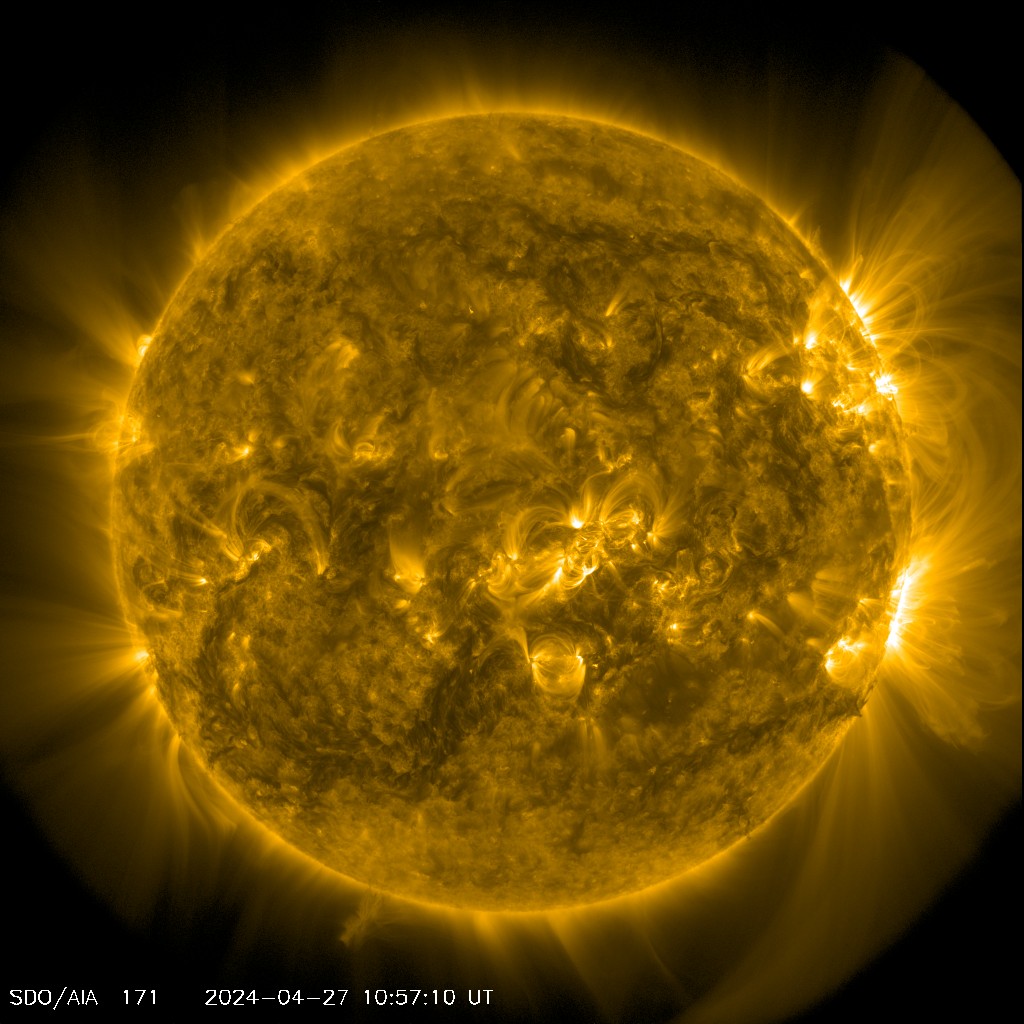
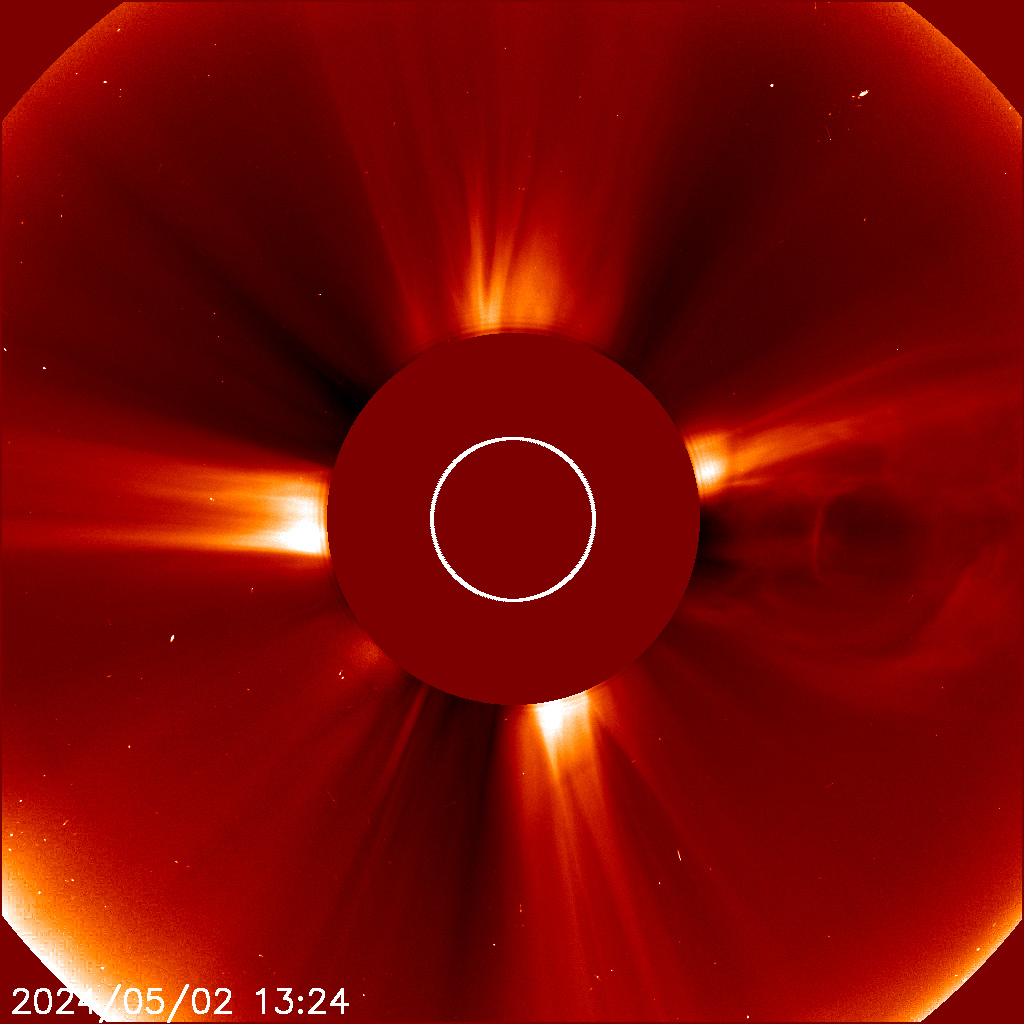
Waiting for retained solar frames. The newest frame opens by default.
Last 20 solar snapshots
0 stored
Live solar imagery: SDO (extreme UV) + SOHO (coronagraph for CME detection). Each refresh is saved locally; the oldest snapshot is dropped after 20.
Earth-interacting solar events · strength and saved results
The default view shows observed Earth interactions and forecast Earth impacts. The full solar catalog remains available for research. Each event retains its own strength markers, dated readings and saved results. A new storm does not close an earlier storm or reset Earth’s recovery.
Opening the research ledger…
Loading dated upstream measurements…
Live solar feeds run independently. Shared research upload is optional and currently disconnected; local records are retained.
Open shared archive and source CSV/JSON downloads
Historical browser records are preserved with their original labels; these are not automatically verified arrivals. Model-derived surface, seismic or volcanic associations are hypotheses requiring independent evaluation.